
Enterprize application design
i2V Analytic Manager (Web application)
i2V Analytic Manager (Web application)
i2V Analytic Manager. Bringing video intelligence to a scalable web platform.
i2V Analytic Manager. Bringing video intelligence to a scalable web platform.
Year :
2024
Industry :
Video management application
Client :
i2V Systems Pvt. Ltd.
Project Duration :
12 weeks
A web-based platform that enables security teams to monitor AI-driven video analytics, investigate events, and generate insights from surveillance data across multiple locations.
Project overview
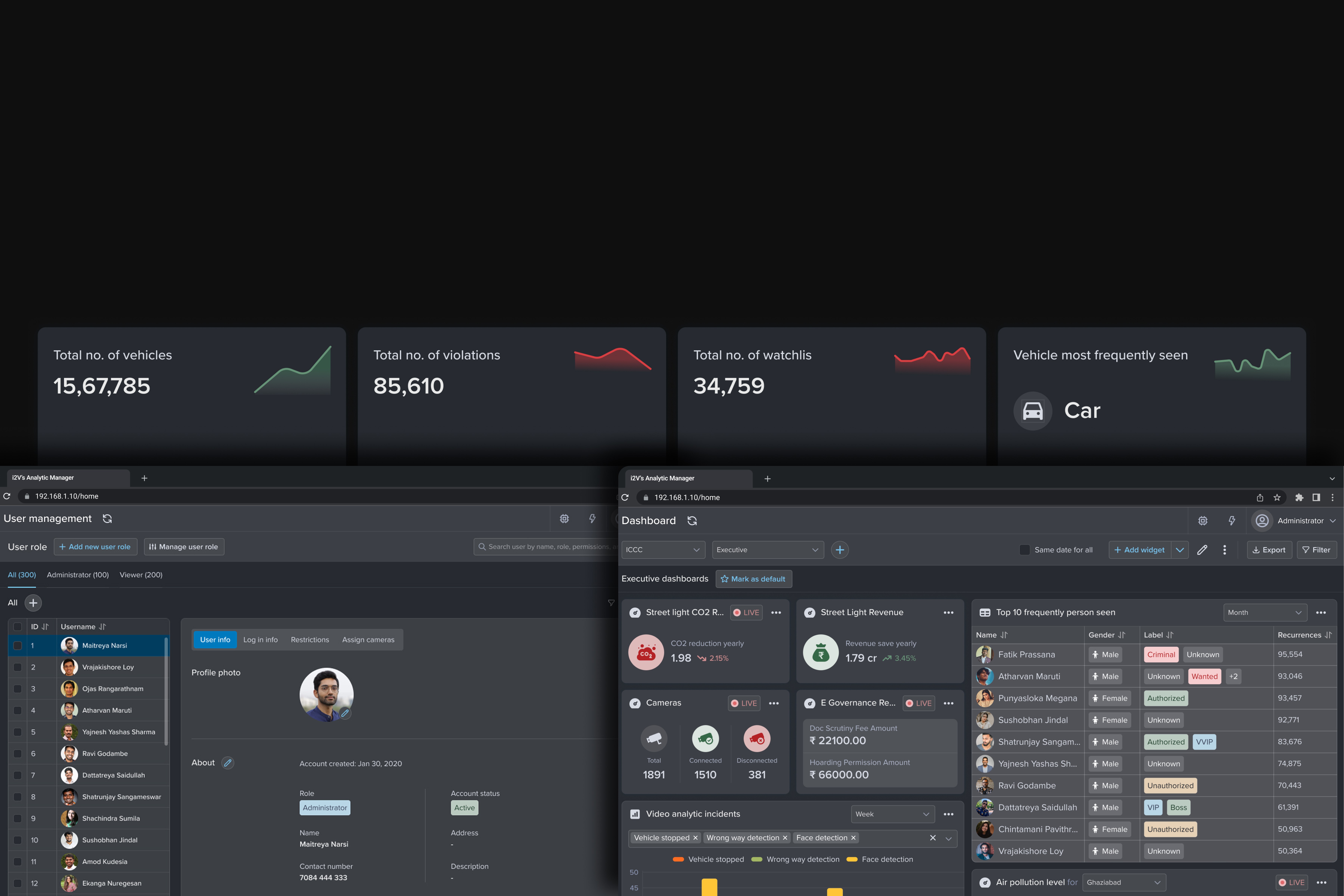
i2V Analytic Manager is a web-based platform that enables security teams to monitor, configure, and investigate video analytics across large surveillance networks. As products like ITMS, FRS, ICCC, and Analytic Manager evolved independently, workflows became fragmented and inconsistent.
My goal was to unify these capabilities into a structured, scalable platform that simplifies complex tasks while introducing a consistent design language. This work reduced operational friction and established a reusable design foundation for future development.
Key focus areas:
Platform consolidation: Unified multiple analytics and surveillance applications into one platform.
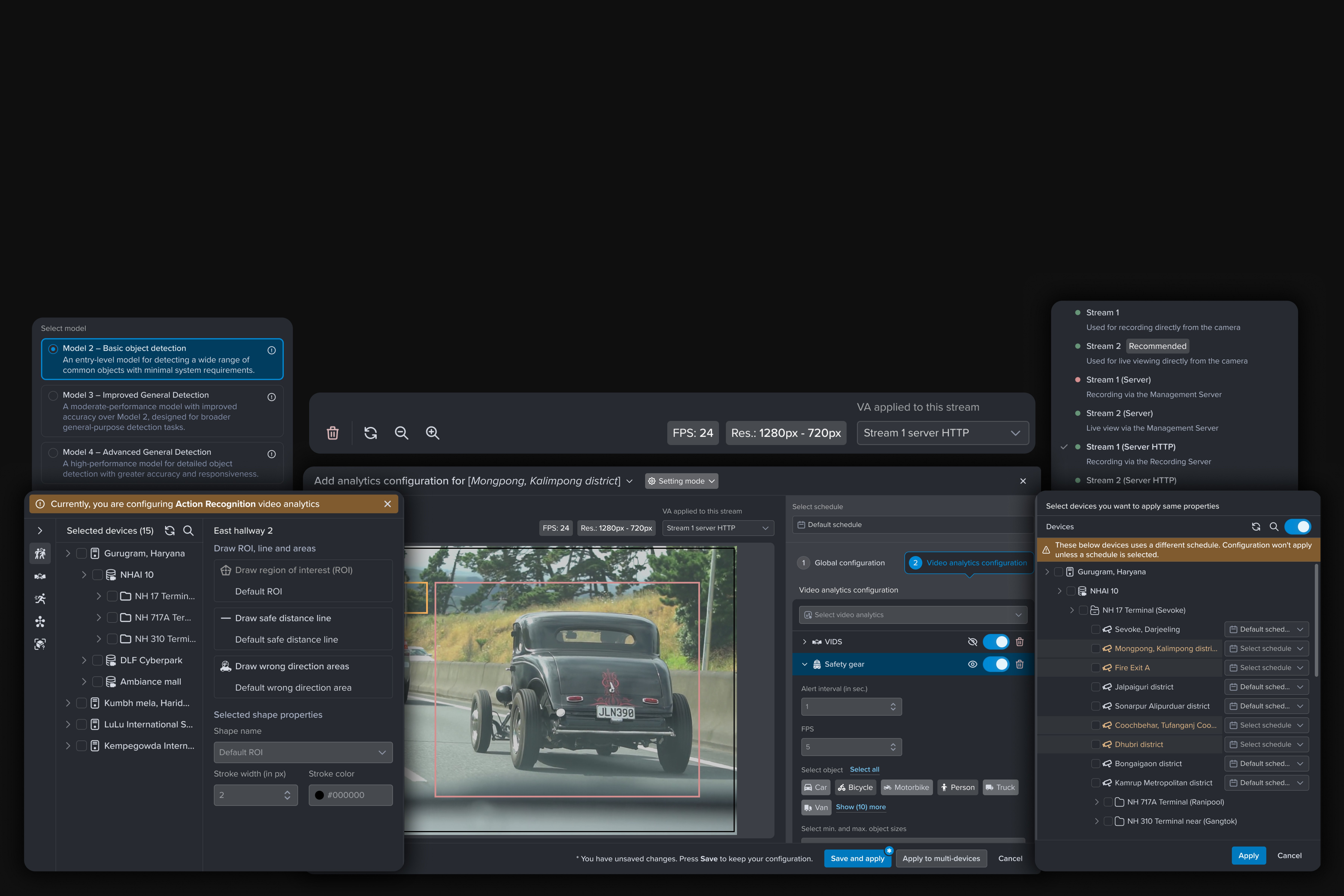
Workflow simplification: Simplified tasks like applying analytics, configuring dashboards, and searching events.
Systematic structure: Introduced consistent navigation, layouts, and interaction patterns.
Design system foundation: Created reusable UI components to support faster and consistent development.
Enterprise usability: Designed interfaces that manage complex configurations without overwhelming users.
Problem :
Connect to Content
Add layers or components to make infinite auto-playing slideshows.
As the surveillance ecosystem expanded with platforms like ITMS, FRS, ICCC, and Analytic Manager, each product evolved independently. This created both operational challenges for the business and usability issues for security teams, making the overall platform harder to scale and operate efficiently.
Business Challenges
Fragmented product ecosystem: Multiple standalone applications made it difficult to position the platform as a unified enterprise solution.
Slower development and maintenance: Inconsistent UI patterns and lack of a shared design system increased development effort and slowed feature rollout.
Limited scalability: Expanding features across separate products created operational complexity and higher product maintenance costs.
User Challenges
Inconsistent workflows across platforms: Operators had to learn different interfaces and navigation patterns for related tasks.
Complex configuration processes: Tasks like applying analytics rules, configuring dashboards, and managing settings required multiple steps and switching contexts.
Higher cognitive load during critical operations: Fragmented experiences slowed down event investigation and monitoring workflows for security teams.
Research & Insights
To understand the challenges across the platform ecosystem, I reviewed existing workflows across ITMS, FRS, ICCC, and Analytic Manager while collaborating with internal teams who regularly demonstrated and configured the system for clients.
The goal was to identify where users struggled the most when managing analytics, investigating events, and configuring the platform. These insights helped define the areas where structural improvements and workflow simplification could create the most impact.
Key Findings
Fragmented navigation slowed task completion: Users often had to switch between multiple modules or platforms to perform related actions like configuring analytics and reviewing events.
Complex configuration flows increased operational effort: Applying analytics, managing settings, and configuring dashboards involved multiple steps and unclear system hierarchy.
Lack of consistent interface patterns created learning friction: Different interaction patterns across applications made the system harder to learn and operate efficiently.
Data-heavy screens lacked clear hierarchy: Large volumes of analytics data, filters, and settings often appeared overwhelming without structured prioritization.


Solution
To address the fragmented ecosystem and complex workflows, I approached the problem by restructuring the platform around clear information architecture, simplified task flows, and a consistent design foundation. The focus was not only on redesigning interfaces but also on creating a scalable system that could unify multiple products while keeping complex analytics operations easy to manage.
By aligning user workflows with a structured platform architecture and introducing reusable design patterns, the solution helped streamline operations for security teams while providing a stronger foundation for future product expansion.
Key Improvements
Unified platform architecture: Consolidated capabilities from multiple applications into a structured and cohesive web experience.
Simplified analytics workflows: Redesigned flows for applying video analytics, configuring dashboards, and investigating events.
Consistent navigation and interaction patterns: Introduced predictable layouts and interaction models across modules.
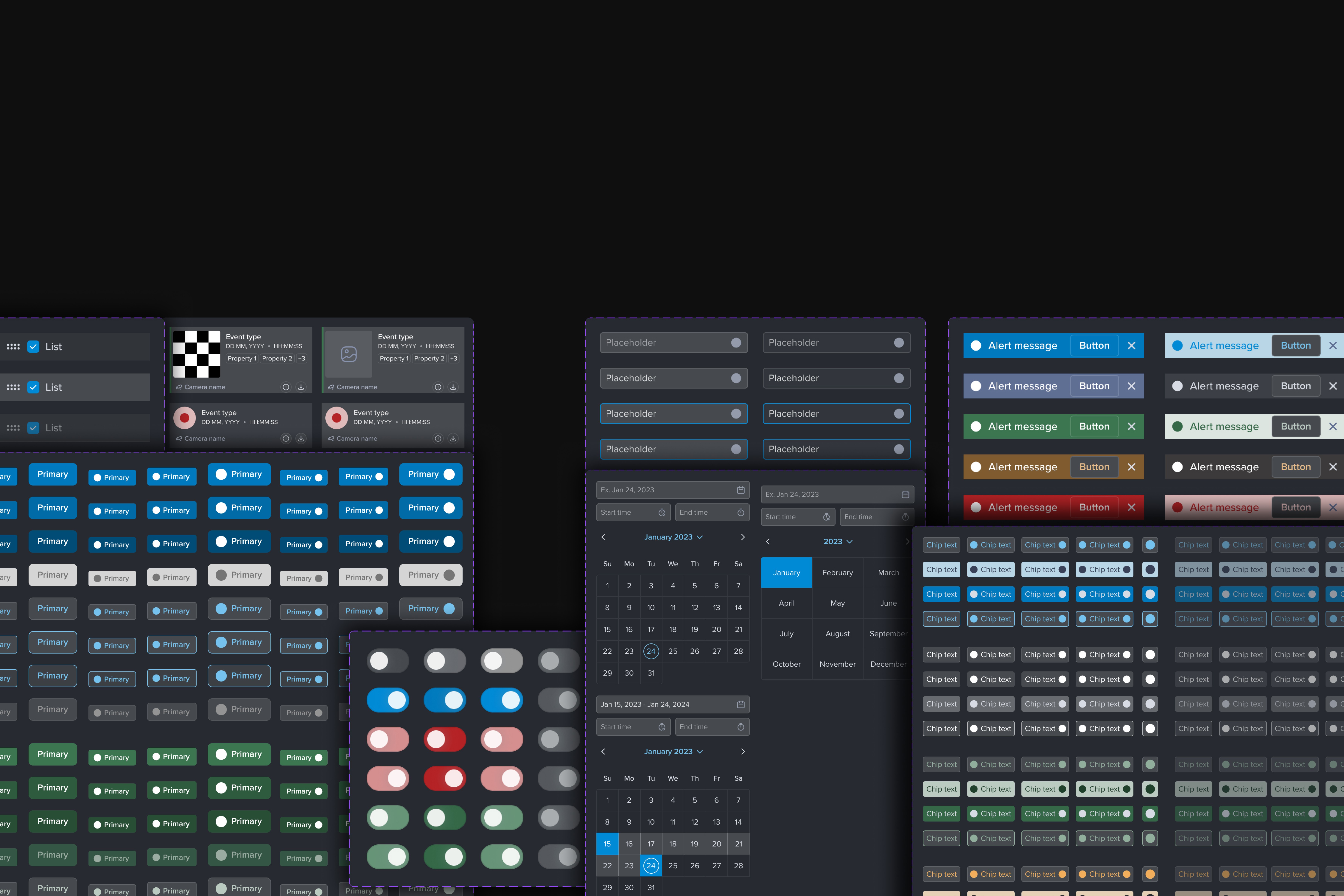
Design system implementation: Established reusable UI components and patterns to improve consistency and development efficiency.
Improved usability for complex configurations: Structured settings and data-heavy interfaces to reduce cognitive load for operators.
My role
As the senior product designer, I led the UX and UI efforts to transform a fragmented set of analytics applications into a more structured and scalable platform.
My role involved identifying usability gaps, defining a clear product structure, and working closely with engineering and internal stakeholders to translate complex operational needs into practical design solutions.
Key contributions
Problem framing and UX strategy: Analyzed existing workflows and platform gaps to define clear design priorities and product direction.
Information architecture and workflow design: Structured navigation and task flows for analytics configuration, dashboards, and event investigation.
Design execution and system thinking: Created wireframes, interaction patterns, and reusable components to ensure consistency across modules.
Cross-team collaboration: Worked closely with developers and internal teams to align design decisions with technical feasibility and product goals.
Outcome-focused design decisions: Prioritized solutions that simplified complex tasks, reduced operational friction, and supported long-term platform scalability.
Challenges
Connect to Content
Add layers or components to make infinite auto-playing slideshows.
Balancing platform consolidation with usability: Integrating multiple applications into one system without overwhelming users with complex configurations and settings.
Structuring complex analytics workflows: Simplifying tasks like applying video analytics, configuring dashboards, and investigating events while preserving enterprise-level flexibility.
Establishing consistency across evolving products: Creating a scalable design system and interaction patterns that align multiple modules and support faster development.
Outcome / Impact
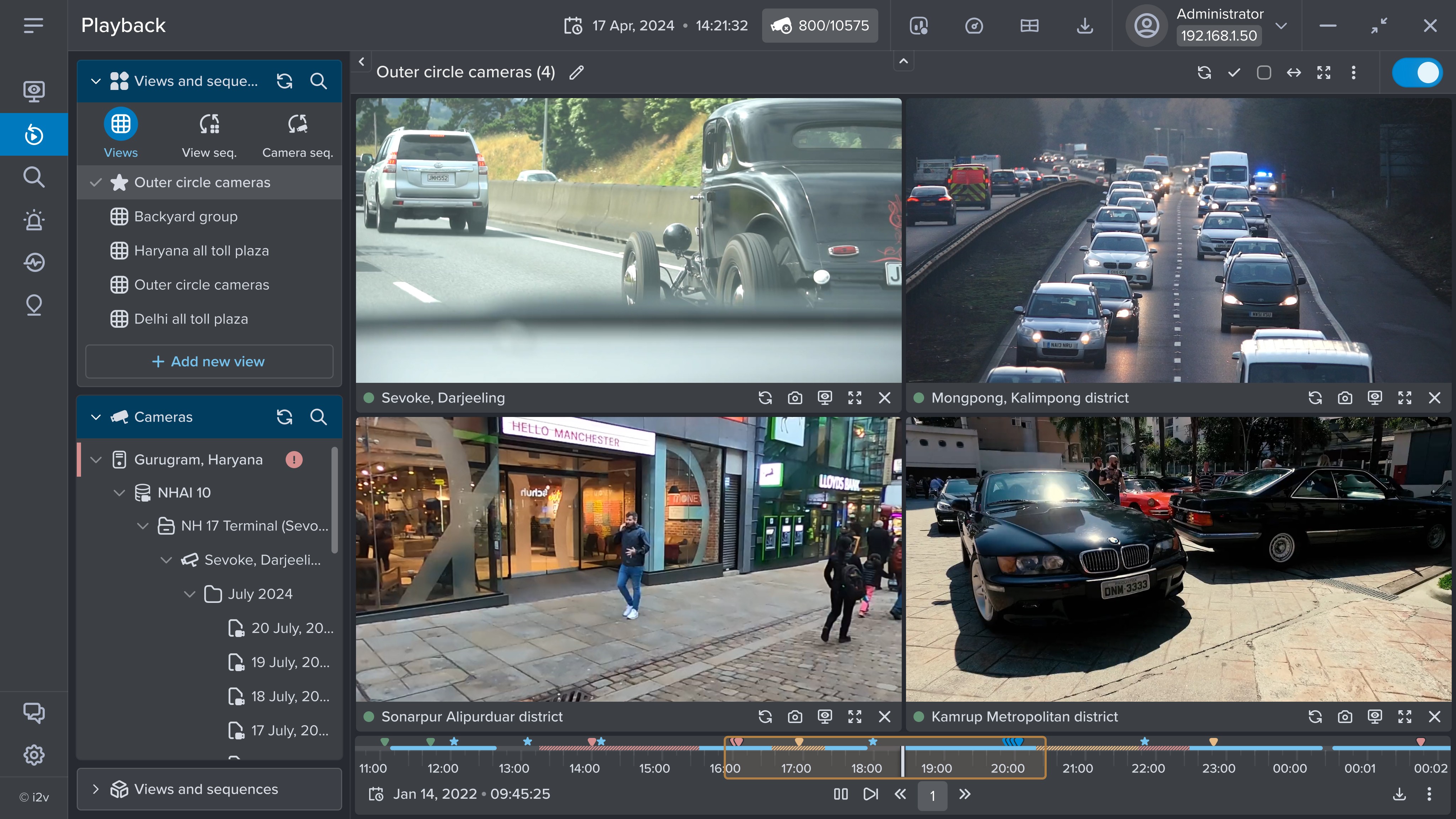

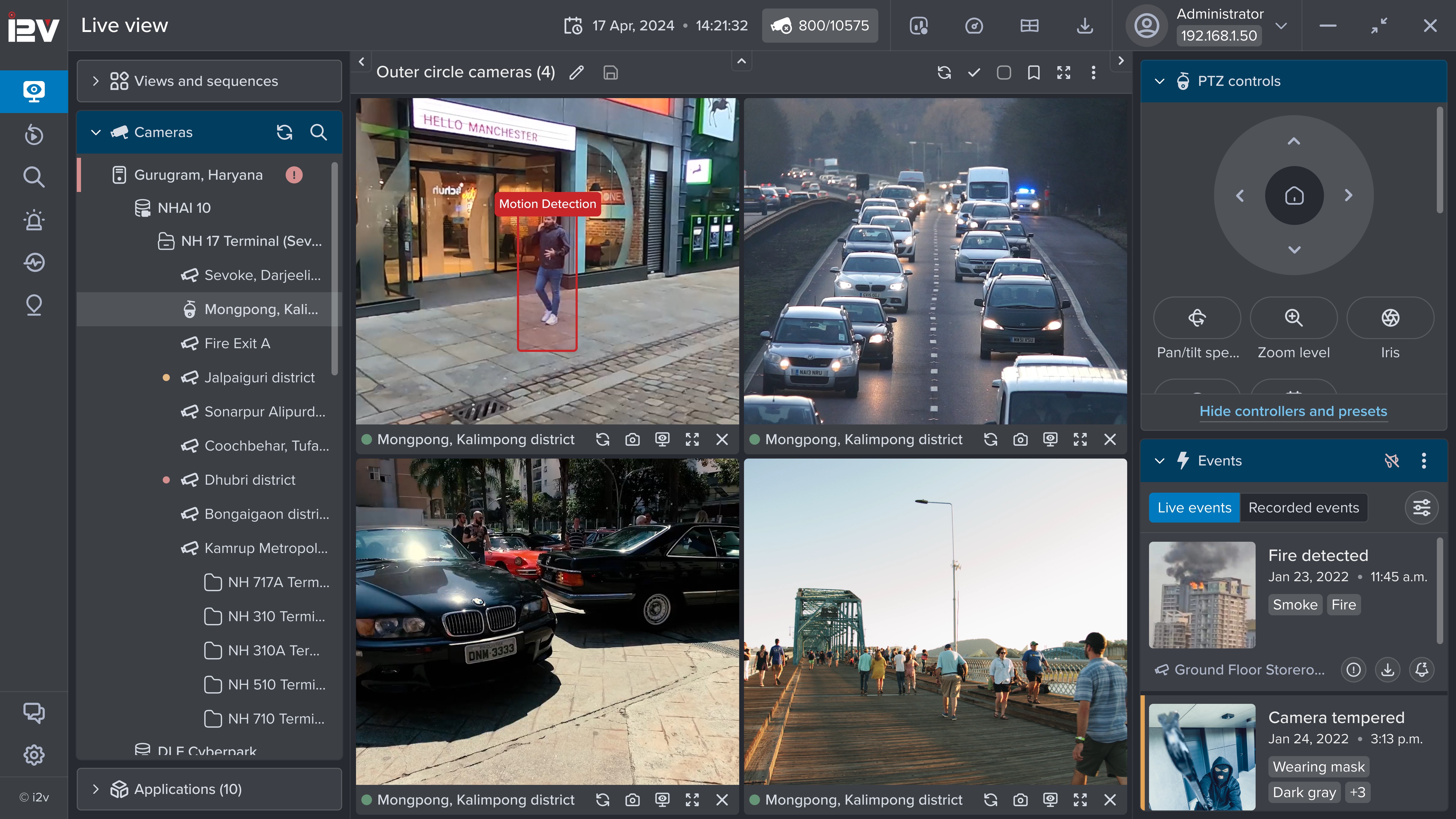
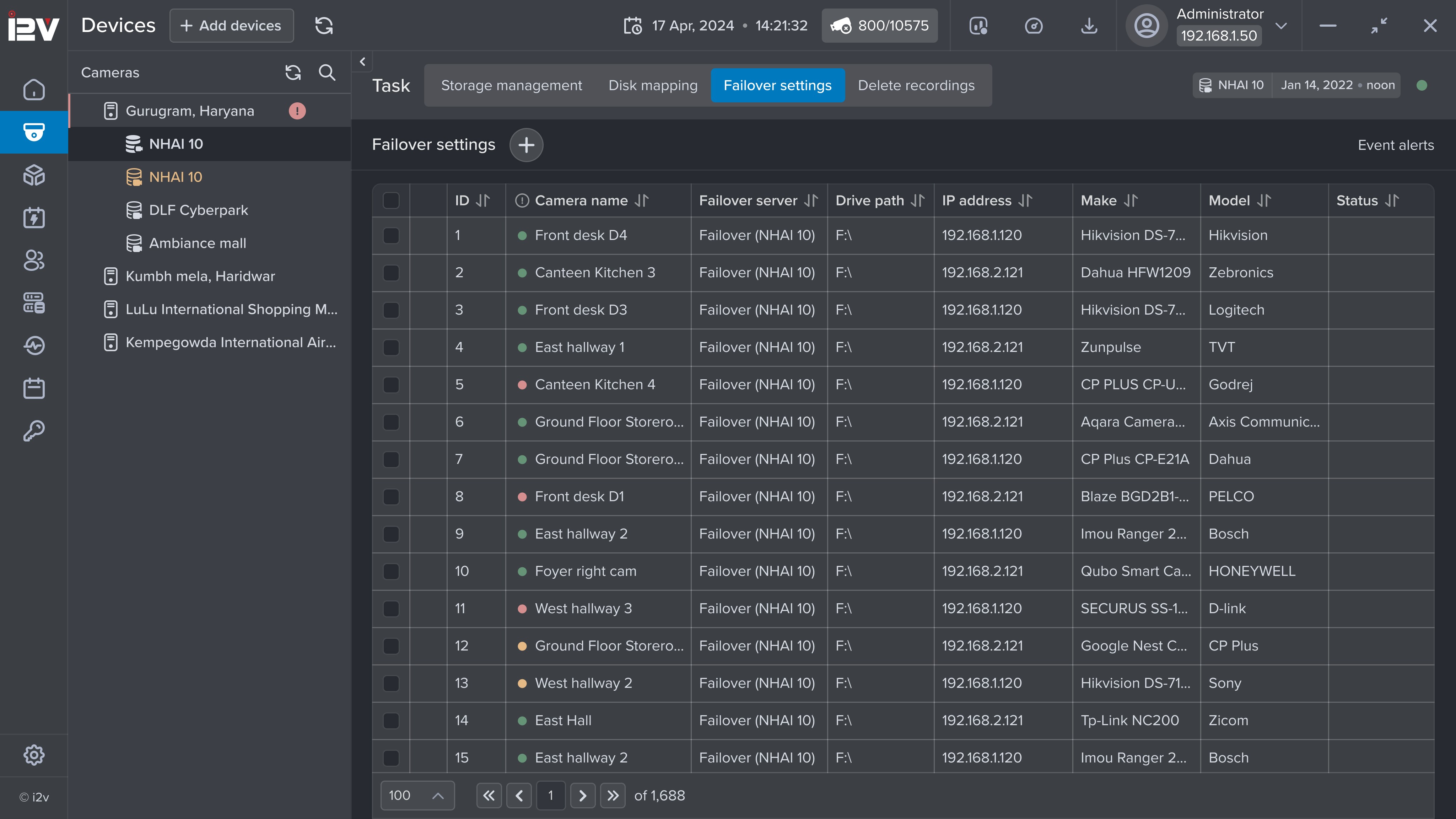
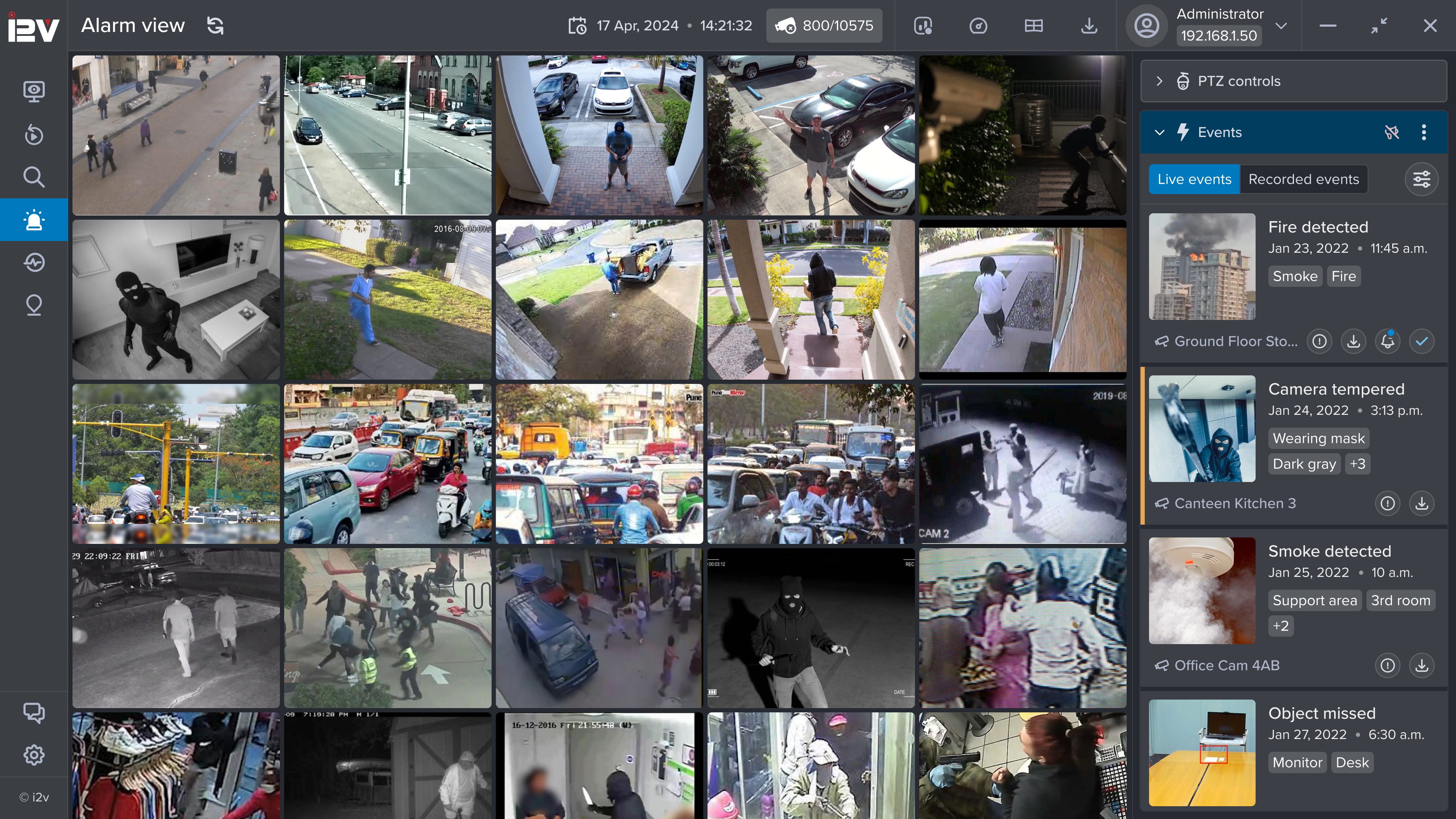
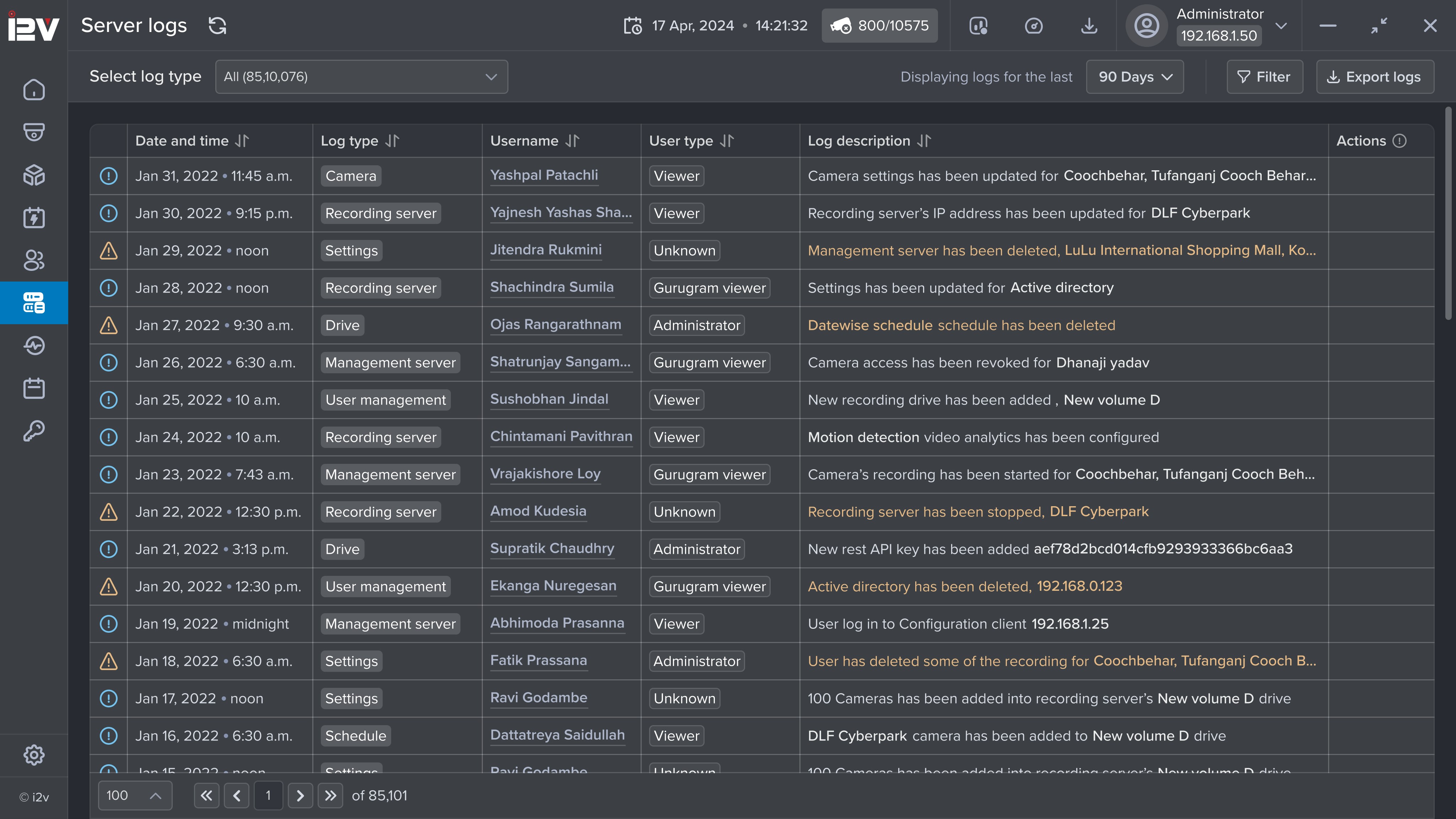
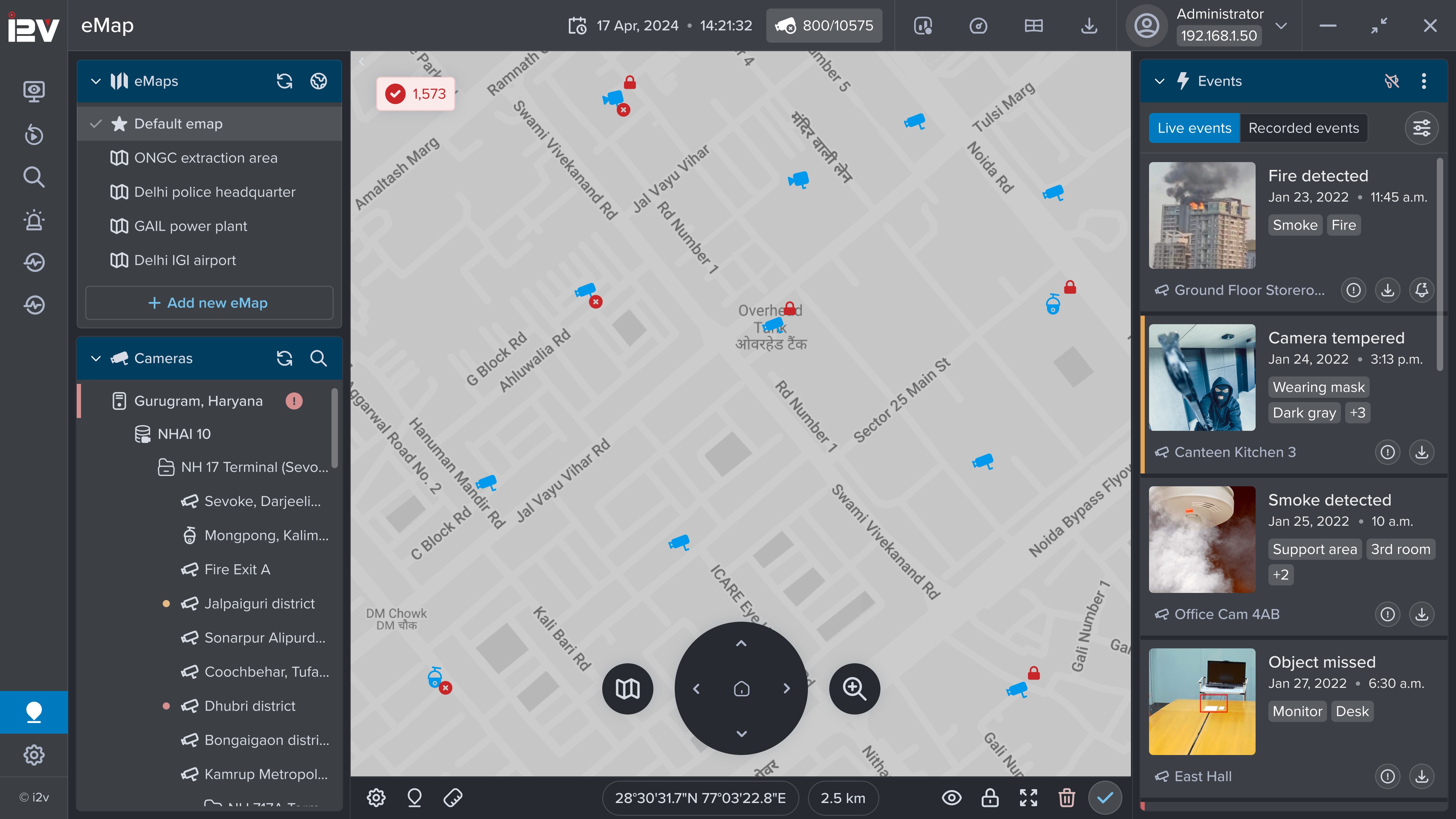
The redesign helped transform a fragmented analytics ecosystem into a more structured and scalable platform, improving both operational efficiency for users and development efficiency for the product team.
Improved workflow efficiency: Security teams could configure analytics, investigate events, and manage dashboards through clearer, more structured workflows.
Stronger product scalability: A unified platform architecture and design system made it easier for the team to introduce new modules and features consistently.
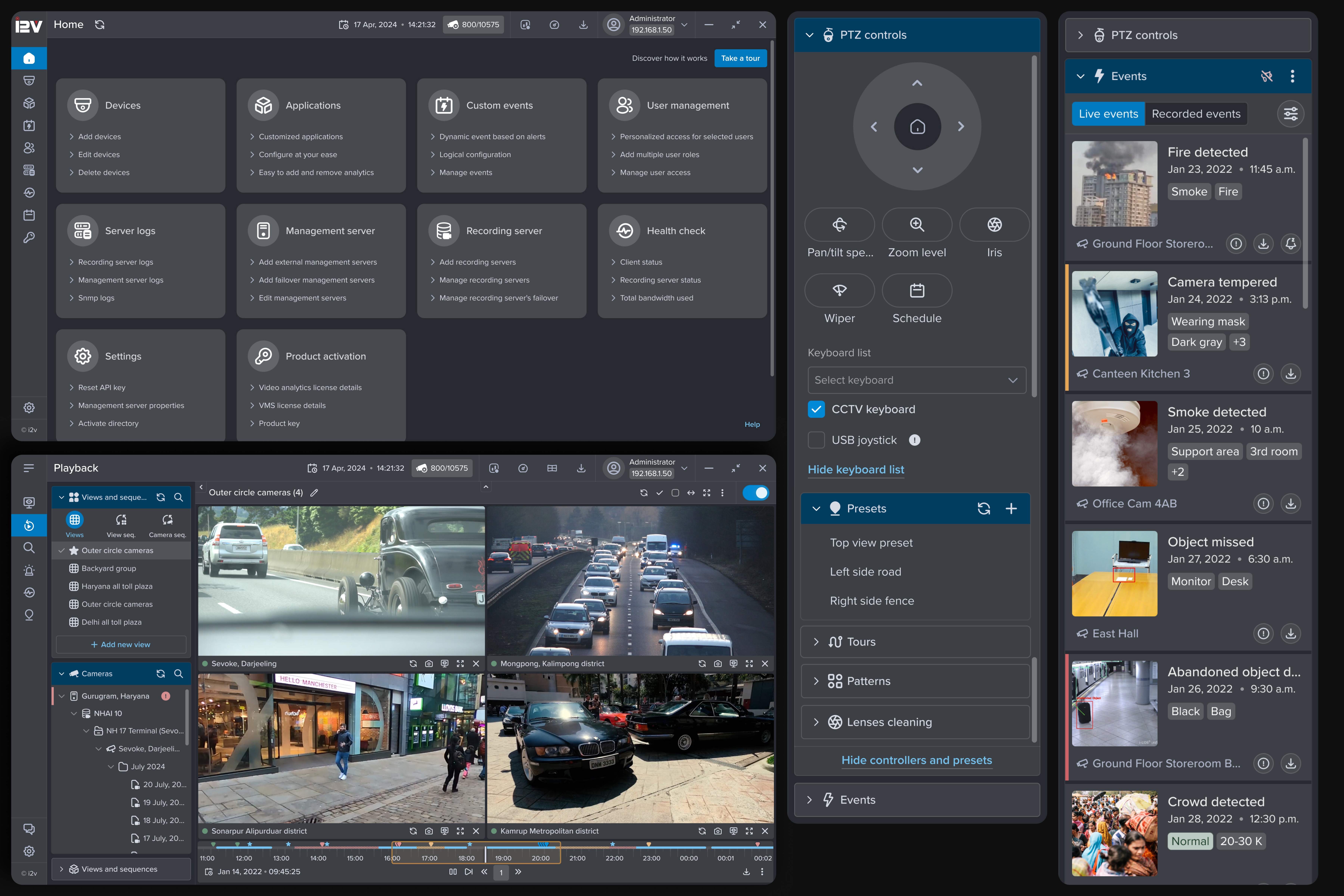
Faster development alignment: Reusable UI components and patterns helped developers implement features more efficiently and maintain consistency across modules.
"The structured approach Zahid introduced helped us align multiple analytics modules under a consistent system. It not only improved usability for operators but also gave the engineering team a clearer framework to build and scale the platform.” — Internal Product / Engineering Manager, i2V Systems
Learning
Designing a unified analytics platform taught me:
“This project reinforced that consolidating complex enterprise products is not just about merging features, but about structuring information and workflows in a way that keeps powerful systems usable and scalable.”
More Projects

Hi
Hi
Curious about the process behind the pixels?
Dive into the stories behind each project, how design decisions shaped better user experiences.
Enterprize application design
i2V Analytic Manager (Web application)
i2V Analytic Manager (Web application)
i2V Analytic Manager. Bringing video intelligence to a scalable web platform.
i2V Analytic Manager. Bringing video intelligence to a scalable web platform.
Year :
2024
Industry :
Video management application
Client :
i2V Systems Pvt. Ltd.
Project Duration :
12 weeks
A web-based platform that enables security teams to monitor AI-driven video analytics, investigate events, and generate insights from surveillance data across multiple locations.
Project overview
i2V Analytic Manager is a web-based platform that enables security teams to monitor, configure, and investigate video analytics across large surveillance networks. As products like ITMS, FRS, ICCC, and Analytic Manager evolved independently, workflows became fragmented and inconsistent.
My goal was to unify these capabilities into a structured, scalable platform that simplifies complex tasks while introducing a consistent design language. This work reduced operational friction and established a reusable design foundation for future development.
Key focus areas:
Platform consolidation: Unified multiple analytics and surveillance applications into one platform.
Workflow simplification: Simplified tasks like applying analytics, configuring dashboards, and searching events.
Systematic structure: Introduced consistent navigation, layouts, and interaction patterns.
Design system foundation: Created reusable UI components to support faster and consistent development.
Enterprise usability: Designed interfaces that manage complex configurations without overwhelming users.
Problem :
Connect to Content
Add layers or components to make infinite auto-playing slideshows.
As the surveillance ecosystem expanded with platforms like ITMS, FRS, ICCC, and Analytic Manager, each product evolved independently. This created both operational challenges for the business and usability issues for security teams, making the overall platform harder to scale and operate efficiently.
Business Challenges
Fragmented product ecosystem: Multiple standalone applications made it difficult to position the platform as a unified enterprise solution.
Slower development and maintenance: Inconsistent UI patterns and lack of a shared design system increased development effort and slowed feature rollout.
Limited scalability: Expanding features across separate products created operational complexity and higher product maintenance costs.
User Challenges
Inconsistent workflows across platforms: Operators had to learn different interfaces and navigation patterns for related tasks.
Complex configuration processes: Tasks like applying analytics rules, configuring dashboards, and managing settings required multiple steps and switching contexts.
Higher cognitive load during critical operations: Fragmented experiences slowed down event investigation and monitoring workflows for security teams.
Research & Insights
To understand the challenges across the platform ecosystem, I reviewed existing workflows across ITMS, FRS, ICCC, and Analytic Manager while collaborating with internal teams who regularly demonstrated and configured the system for clients.
The goal was to identify where users struggled the most when managing analytics, investigating events, and configuring the platform. These insights helped define the areas where structural improvements and workflow simplification could create the most impact.
Key Findings
Fragmented navigation slowed task completion: Users often had to switch between multiple modules or platforms to perform related actions like configuring analytics and reviewing events.
Complex configuration flows increased operational effort: Applying analytics, managing settings, and configuring dashboards involved multiple steps and unclear system hierarchy.
Lack of consistent interface patterns created learning friction: Different interaction patterns across applications made the system harder to learn and operate efficiently.
Data-heavy screens lacked clear hierarchy: Large volumes of analytics data, filters, and settings often appeared overwhelming without structured prioritization.
Solution
To address the fragmented ecosystem and complex workflows, I approached the problem by restructuring the platform around clear information architecture, simplified task flows, and a consistent design foundation. The focus was not only on redesigning interfaces but also on creating a scalable system that could unify multiple products while keeping complex analytics operations easy to manage.
By aligning user workflows with a structured platform architecture and introducing reusable design patterns, the solution helped streamline operations for security teams while providing a stronger foundation for future product expansion.
Key Improvements
Unified platform architecture: Consolidated capabilities from multiple applications into a structured and cohesive web experience.
Simplified analytics workflows: Redesigned flows for applying video analytics, configuring dashboards, and investigating events.
Consistent navigation and interaction patterns: Introduced predictable layouts and interaction models across modules.
Design system implementation: Established reusable UI components and patterns to improve consistency and development efficiency.
Improved usability for complex configurations: Structured settings and data-heavy interfaces to reduce cognitive load for operators.
My role
As the senior product designer, I led the UX and UI efforts to transform a fragmented set of analytics applications into a more structured and scalable platform.
My role involved identifying usability gaps, defining a clear product structure, and working closely with engineering and internal stakeholders to translate complex operational needs into practical design solutions.
Key contributions
Problem framing and UX strategy: Analyzed existing workflows and platform gaps to define clear design priorities and product direction.
Information architecture and workflow design: Structured navigation and task flows for analytics configuration, dashboards, and event investigation.
Design execution and system thinking: Created wireframes, interaction patterns, and reusable components to ensure consistency across modules.
Cross-team collaboration: Worked closely with developers and internal teams to align design decisions with technical feasibility and product goals.
Outcome-focused design decisions: Prioritized solutions that simplified complex tasks, reduced operational friction, and supported long-term platform scalability.
Challenges
Connect to Content
Add layers or components to make infinite auto-playing slideshows.
Balancing platform consolidation with usability: Integrating multiple applications into one system without overwhelming users with complex configurations and settings.
Structuring complex analytics workflows: Simplifying tasks like applying video analytics, configuring dashboards, and investigating events while preserving enterprise-level flexibility.
Establishing consistency across evolving products: Creating a scalable design system and interaction patterns that align multiple modules and support faster development.
Outcome / Impact
The redesign helped transform a fragmented analytics ecosystem into a more structured and scalable platform, improving both operational efficiency for users and development efficiency for the product team.
Improved workflow efficiency: Security teams could configure analytics, investigate events, and manage dashboards through clearer, more structured workflows.
Stronger product scalability: A unified platform architecture and design system made it easier for the team to introduce new modules and features consistently.
Faster development alignment: Reusable UI components and patterns helped developers implement features more efficiently and maintain consistency across modules.
"The structured approach Zahid introduced helped us align multiple analytics modules under a consistent system. It not only improved usability for operators but also gave the engineering team a clearer framework to build and scale the platform.” — Internal Product / Engineering Manager, i2V Systems
Learning
Designing a unified analytics platform taught me:
“This project reinforced that consolidating complex enterprise products is not just about merging features, but about structuring information and workflows in a way that keeps powerful systems usable and scalable.”
More Projects
Hi
Hi
Curious about the process behind the pixels?
Dive into the stories behind each project, how design decisions shaped better user experiences.
Enterprize application design
i2V Analytic Manager (Web application)
i2V Analytic Manager (Web application)
i2V Analytic Manager. Bringing video intelligence to a scalable web platform.
i2V Analytic Manager. Bringing video intelligence to a scalable web platform.
Year :
2024
Industry :
Video management application
Client :
i2V Systems Pvt. Ltd.
Project Duration :
12 weeks
A web-based platform that enables security teams to monitor AI-driven video analytics, investigate events, and generate insights from surveillance data across multiple locations.
Project overview
i2V Analytic Manager is a web-based platform that enables security teams to monitor, configure, and investigate video analytics across large surveillance networks. As products like ITMS, FRS, ICCC, and Analytic Manager evolved independently, workflows became fragmented and inconsistent.
My goal was to unify these capabilities into a structured, scalable platform that simplifies complex tasks while introducing a consistent design language. This work reduced operational friction and established a reusable design foundation for future development.
Key focus areas:
Platform consolidation: Unified multiple analytics and surveillance applications into one platform.
Workflow simplification: Simplified tasks like applying analytics, configuring dashboards, and searching events.
Systematic structure: Introduced consistent navigation, layouts, and interaction patterns.
Design system foundation: Created reusable UI components to support faster and consistent development.
Enterprise usability: Designed interfaces that manage complex configurations without overwhelming users.
Problem :
Connect to Content
Add layers or components to make infinite auto-playing slideshows.
As the surveillance ecosystem expanded with platforms like ITMS, FRS, ICCC, and Analytic Manager, each product evolved independently. This created both operational challenges for the business and usability issues for security teams, making the overall platform harder to scale and operate efficiently.
Business Challenges
Fragmented product ecosystem: Multiple standalone applications made it difficult to position the platform as a unified enterprise solution.
Slower development and maintenance: Inconsistent UI patterns and lack of a shared design system increased development effort and slowed feature rollout.
Limited scalability: Expanding features across separate products created operational complexity and higher product maintenance costs.
User Challenges
Inconsistent workflows across platforms: Operators had to learn different interfaces and navigation patterns for related tasks.
Complex configuration processes: Tasks like applying analytics rules, configuring dashboards, and managing settings required multiple steps and switching contexts.
Higher cognitive load during critical operations: Fragmented experiences slowed down event investigation and monitoring workflows for security teams.
Research & Insights
To understand the challenges across the platform ecosystem, I reviewed existing workflows across ITMS, FRS, ICCC, and Analytic Manager while collaborating with internal teams who regularly demonstrated and configured the system for clients.
The goal was to identify where users struggled the most when managing analytics, investigating events, and configuring the platform. These insights helped define the areas where structural improvements and workflow simplification could create the most impact.
Key Findings
Fragmented navigation slowed task completion: Users often had to switch between multiple modules or platforms to perform related actions like configuring analytics and reviewing events.
Complex configuration flows increased operational effort: Applying analytics, managing settings, and configuring dashboards involved multiple steps and unclear system hierarchy.
Lack of consistent interface patterns created learning friction: Different interaction patterns across applications made the system harder to learn and operate efficiently.
Data-heavy screens lacked clear hierarchy: Large volumes of analytics data, filters, and settings often appeared overwhelming without structured prioritization.
Solution
To address the fragmented ecosystem and complex workflows, I approached the problem by restructuring the platform around clear information architecture, simplified task flows, and a consistent design foundation. The focus was not only on redesigning interfaces but also on creating a scalable system that could unify multiple products while keeping complex analytics operations easy to manage.
By aligning user workflows with a structured platform architecture and introducing reusable design patterns, the solution helped streamline operations for security teams while providing a stronger foundation for future product expansion.
Key Improvements
Unified platform architecture: Consolidated capabilities from multiple applications into a structured and cohesive web experience.
Simplified analytics workflows: Redesigned flows for applying video analytics, configuring dashboards, and investigating events.
Consistent navigation and interaction patterns: Introduced predictable layouts and interaction models across modules.
Design system implementation: Established reusable UI components and patterns to improve consistency and development efficiency.
Improved usability for complex configurations: Structured settings and data-heavy interfaces to reduce cognitive load for operators.
My role
As the senior product designer, I led the UX and UI efforts to transform a fragmented set of analytics applications into a more structured and scalable platform.
My role involved identifying usability gaps, defining a clear product structure, and working closely with engineering and internal stakeholders to translate complex operational needs into practical design solutions.
Key contributions
Problem framing and UX strategy: Analyzed existing workflows and platform gaps to define clear design priorities and product direction.
Information architecture and workflow design: Structured navigation and task flows for analytics configuration, dashboards, and event investigation.
Design execution and system thinking: Created wireframes, interaction patterns, and reusable components to ensure consistency across modules.
Cross-team collaboration: Worked closely with developers and internal teams to align design decisions with technical feasibility and product goals.
Outcome-focused design decisions: Prioritized solutions that simplified complex tasks, reduced operational friction, and supported long-term platform scalability.
Challenges
Connect to Content
Add layers or components to make infinite auto-playing slideshows.
Balancing platform consolidation with usability: Integrating multiple applications into one system without overwhelming users with complex configurations and settings.
Structuring complex analytics workflows: Simplifying tasks like applying video analytics, configuring dashboards, and investigating events while preserving enterprise-level flexibility.
Establishing consistency across evolving products: Creating a scalable design system and interaction patterns that align multiple modules and support faster development.
Outcome / Impact
The redesign helped transform a fragmented analytics ecosystem into a more structured and scalable platform, improving both operational efficiency for users and development efficiency for the product team.
Improved workflow efficiency: Security teams could configure analytics, investigate events, and manage dashboards through clearer, more structured workflows.
Stronger product scalability: A unified platform architecture and design system made it easier for the team to introduce new modules and features consistently.
Faster development alignment: Reusable UI components and patterns helped developers implement features more efficiently and maintain consistency across modules.
"The structured approach Zahid introduced helped us align multiple analytics modules under a consistent system. It not only improved usability for operators but also gave the engineering team a clearer framework to build and scale the platform.” — Internal Product / Engineering Manager, i2V Systems
Learning
Designing a unified analytics platform taught me:
“This project reinforced that consolidating complex enterprise products is not just about merging features, but about structuring information and workflows in a way that keeps powerful systems usable and scalable.”
More Projects
Hi
Hi
Curious about the process behind the pixels?
Dive into the stories behind each project, how design decisions shaped better user experiences.